


Cattle Market’s Promising 10,000-Foot View
I understand whenever the market begins to trend lower -- as it did earlier this week -- we question ourselves and the bullish outlook. However, sound fundamental outlooks shouldn't be overridden by knee-jerk reactions.



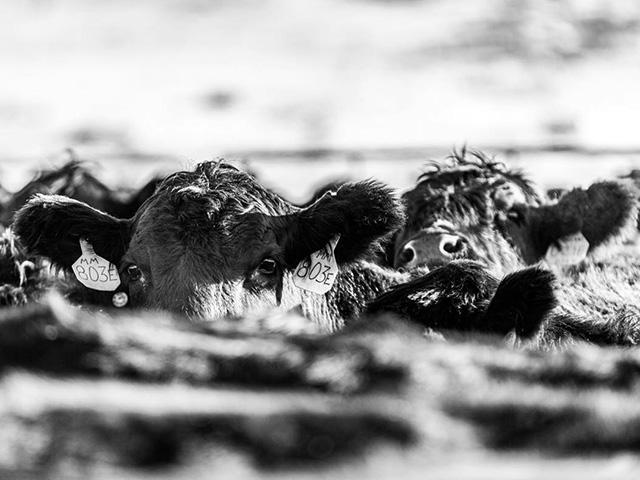
The highly anticipated Cattle Inventory report is set to be released this on Jan. 30. Cattlemen across the country are asking the same question: Has the herd rebuild started yet? (Photo by Kristen Schurr)
In today’s fast-paced, “move-it-or-lose-it” society, I find it alarming just how quickly our thoughts, perspectives and inner voices can second-guess themselves when we’re faced with confrontations — and that goes for the cattle market, too.
Just last week the cash cattle market charged $3 to $5 higher and lofty technical gains were seen throughout the futures complex. But now that the futures market has closed lower for two days in a row, analysts and cattlemen alike are wondering if they need to reconsider their bullish mindset.
This is why I’d like to step back today and talk about the market and its trajectory from a 10,000-foot view. It’s easy to get engrained in the market’s deep trenches when you’re tracking trend lines or studying sale reports. Both are very important and insightful. But sometimes it’s equally powerful to step back, quiet the noise of the market, and reassess things from a greater market perspective.
First, let’s talk about the wild success last week’s live cattle and feeder cattle markets had. The cash cattle market waited until late Friday afternoon to trade, developing at $280 in the North (which is $3 higher than the previous week) and Southern cattle traded for $178 to $179 (which is $4 to $5 higher than the previous week’s weighted average). Feedlot managers deserve a loud round of applause after that success as it’s not easy to advance the cash market that aggressively, especially when packers’ margins are suffering.
Secondly, the board was fully supportive as both the live cattle and feeder cattle contracts charged onward last week. Last Friday, the spot April live cattle contract closed at $186.72, the highest price point traded since last fall before prices broke sharply lower. The spot March feeder cattle contract saw the same type of support as it closed at $247.15 Friday, the highest price since last October.
Additionally, let’s not overlook what the industry is telling us from the ground level. Regardless of what region you look at, feeder cattle prices have been hot thus far in February as cattle buyers are worried there won’t be enough calves/feeders to procure later this spring. The market has seen a huge advancement in four to six weights as some buyers elect to purchase their grass calves now. To put these prices into perspective, the CME Feeder Cattle Index closed Friday at $242.95, which is $60.42/hundredweight more than a year ago.
So, in conclusion, I understand whenever the market begins to trend lower (as it has early this week), we all question ourselves and the bullish outlook. But sound fundamental outlooks shouldn’t be overridden by knee-jerk reactions. Yes, let’s just state the obvious and recognize that Tuesday’s announcement of a 0.3% increase in the Consumer Price Index is bothersome for consumers and the market alike, but not something we should have been caught off guard by. We understand the federal government would like to decrease interest rates, but until inflation stabilizes, that simply won’t happen. The economy remains stressed; but from a 10,000-foot view, the cattle market still has plenty of bull behind it.
ShayLe Stewart can be reached at ShayLe.Stewart@dtn.com