


The Product Parade
Discover the latest seed and trait innovations targeting weeds, nematodes and drought stress. See what the industry's biggest R and D pipelines mean for your farm's yield and input costs in the seasons ahead.


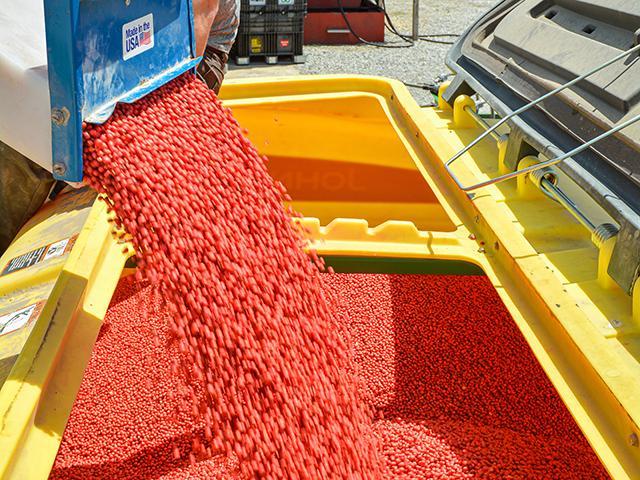
Major seed and trait providers share the latest developments in their pipelines. (Matt Wilde)
For farmers battling resistant weeds, stubborn nematodes and an increasingly unpredictable climate, help may be on the way. The seed and trait industry’s research and development pipeline is packed with innovations — from the first biotech trait for soybean cyst nematode to a new herbicide mode of action and hybrid wheat yielding 10% more with the same inputs. Read on for a look at what’s coming from four major players. Note: Content comes directly from each company with minor edits, and it’s important to remember that other seed companies may also license some of these technologies.
BASF
BASF is committed to helping farmers maximize yield on every acre through new products and varieties in soy and canola.
— Nemasphere Launch
Soybean cyst nematode (SCN) is one of the leading causes of soybean yield loss in the U.S., and BASF has spent the past two decades developing the Nemasphere nematode resistance trait. Nemasphere delivers the first and only biotech trait for SCN control, unlocking a new dimension of yield potential by targeting the most costly and persistent barrier to higher performance below the soil.
Powered by four modes of action, Enlist E3, combined with Nemasphere, brings weed control exactly where it matters most. The broad-spectrum power and field-level flexibility give farmers the strength to take on tough weeds across their acres. Enlist E3 and Nemasphere are integrated with elite genetics to unlock the full agronomic potential of top-performing varieties.
By delivering control from all angles, it maximizes the seed’s genetic expression for more consistent, dependable performance across every acre. Nemasphere is anticipated to be available in 2028, pending regulatory approval.
— First InVigor Gold Hybrid
BASF introduced InVigor Gold L322, the first hybrid released in BASF’s breakthrough innovation in canola seed. Designed to unlock the full genetic potential of canola-quality Brassica juncea and expand U.S. canola acreage, InVigor Gold L322 will first be available in Montana in 2027, pending final regulatory approvals.
InVigor Gold hybrid canola seed expands the trusted InVigor portfolio by delivering consistent performance and yield stability across a wider range of growing conditions as shown in BASF’s field trials. Designed to thrive in more arid conditions with higher heat and on lower organic matter soils, InVigor Gold L322 helps growers succeed where canola has not traditionally fit.
With earlier maturity allowing the crop to flower sooner and finish faster, InVigor Gold L322 is well-suited for warmer and drier environments, representing the earliest-maturing hybrid in the InVigor portfolio to date. Combined with native pod shatter tolerance and LibertyLink weed control, InVigor Gold L322 will provide Montana growers with a new rotational option that adds flexibility, profitability and whole-farm productivity.
BAYER
Over the next decade, Bayer plans to launch 10 products that will have a major impact on the production of food, fuel and fiber in the U.S. and globally.
The pipeline includes a new postemergent herbicide mode of action; a biotech version of reduced-stature corn hybrids; and fourth- and fifth-generation soybean herbicide tolerance traits, providing tolerance to five and six chemistries.
— Corn Advancements
Bayer launched the Preceon Smart Corn System, its conventionally bred, short-stature corn platform, in 2024 and has since doubled the number of acres year over year, with roughly 1 million acres expected by the end of the decade. Bayer continues work on advancing its biotech approach.
With improved standability in high winds and challenging weather conditions, Preceon allows farmers to better manage their crop by providing better in-season access, enabling more precise crop-protection tools such as herbicides and fungicides, and applications of inputs such as nitrogen.
— Weed-Control Strategies
Digitalization has been a key factor in advances in application technology and data science, and Bayer has relied on artificial intelligence (AI) in its quest to help farmers control challenging weeds. For example, Bayer’s icafolin product represents a new mode-of-action herbicide with an anticipated launch in the U.S. later this decade.
Through its CropKey approach, Bayer uses AI to help speed up the process by matching the protein structure of a weed with a molecule that targets that structure. This enables the company to canvass huge amounts of data, significantly broadening the potential candidate pool beyond previously used molecules.
Earlier this year, the U.S. EPA granted registration for Convintro, a Group 12 preemergent herbicide for corn and soybeans. Convintro delivers targeted activity against Palmer amaranth and waterhemp. It offers exceptional tank-mix flexibility with many groups of residual herbicides, allowing farmers to customize their approach based on their specific weed spectrum and resistance patterns.
— Soybean Solutions
Vyconic soybeans are an industry-first trait platform featuring tolerance to five herbicides: glyphosate, glufosinate, dicamba, 2,4-D and mesotrione. Expected for a limited market introduction in 2027, the technology offers growers flexibility to combat resistant weeds with the yield potential growers expect from XtendFlex soybeans.
CORTEVA AGRISCIENCE
The Corteva Agriscience research and development (R&D) pipeline continues forward in the field, propelled by its leadership in breeding and next-generation trait technology. Farmers can look ahead to seed innovations that will increase yield potential through genetic gains and built-in protection from yield-robbing pests.
— Hybrid Wheat in 2027
Corteva has announced a proprietary non-GMO hybrid wheat breeding system technology that accelerates the speed to market by increasing the scale of parent seed production — more quickly bringing new choices to farmers. Hybrid hard red winter wheat is anticipated to launch in the Pioneer brand in 2027. In company trials, Corteva’s hybrid wheat has demonstrated a 10% increase in yield potential using the same amount of land and resources as varietal wheat. Trials show a roughly 20% higher yield than elite varieties in water-stressed environments, helping farmers better adapt to climate challenges.
— Expanded Lineup of Corn Products
For 2027, Vorceed Enlist corn technology will be available in an expanded lineup of high-yield-potential products across a wide range of maturities. It features three-way protection against corn rootworm, including RNAi (RNA interference) technology combined with proven Bt proteins. These products provide tolerance to 2,4-D choline in Enlist herbicides, glyphosate, glufosinate and FOP herbicides — giving farmers greater choice for weed management. On the horizon, farmers can expect new insect trait technologies offering multiple modes of action for above- and belowground pests, as well as new disease resistance traits developed through gene-editing technology.
— Next-Generation Soybeans
Corteva will add to its offering of Enlist E3 soybean varieties with diverse maturity groups and disease-protection packages to provide more products with the soybean technology. New Pioneer brand Plenish high oleic soybean varieties with the Enlist E3 trait will be available for dairy farmers in key geographies. In the future, farmers can expect herbicide technology to overcome challenges that they face in the field.
— New Cottonseed Varieties
PhytoGen cottonseed has three new varieties for 2027 to expand its portfolio of next-generation products with breakthrough yield and fiber quality potential. These varieties come with built-in resistance to yield-robbing pests, such as bacterial blight, root-knot nematodes and reniform nematodes to preserve high yield potential.
SYNGENTA
The Syngenta R&D engine delivers farmer-first, field-ready solutions through work that begins with farmers’ needs and focuses on their success. A robust trait-development pipeline keeps solutions coming, while practical innovations like industry-leading corn and soybean seed treatments help optimize performance from the start.
— Delivering a New Strategy for Corn Rootworm
Durastak trait technology is the industry’s first triple Bt protein stack for corn rootworm control, bringing a long-term strategy for controlling this yield-robbing pest. Durastak hybrids help control damaging above- and belowground pests with alternative modes of action, providing farmers with a tool to delay insect resistance for long-term corn rootworm management. Durastak and DurastakViptera hybrids are available for the 2027 season in both the Golden Harvest and NK brands, as well as through independent seed companies.
— Corn Evolution
The class of 2027 was developed from differentiated germplasm with next-generation trait technologies to deliver consistent, high-quality crops that stand strong all season and handle a variety of management practices. The portfolio of early- and late-season hybrids gives farmers more options for every acre and disease-tolerance ratings to help meet local challenges.
— Soybean Success
New-for-2027 soybean varieties feature enhanced iron deficiency chlorosis tolerance to stand up to in-field stress; increased native trait frequency to protect against disease and help promote yield gain; and greater Peking SCN resistance with rugged agronomics. The full portfolio delivers products that work well across different farming practices, stand strong during tough growing conditions and provide high yield potential.
— Research Emphasis
The Syngenta agronomy research program analyzes the agronomic characteristics of Syngenta products to aid in placement and use in real-world farm situations. Agronomy research locations positioned throughout the Corn Belt focus on answering farmers’ most pressing management questions both for its products and ever-changing agronomic pressures such as weather, pests and diseases. Agronomists use uniform testing methodology to ensure that research results are a reliable prediction of the response farmers will see in their fields. Multiyear studies provide tremendous insight into specific management tactics for each product so that farmers can maximize the potential for profit on their farms.
**
— Follow Jason on social platform X @JasonJenkinsDTN
[PF_0926]
(c) Copyright 2026 DTN, LLC. All rights reserved.