


A Dig Into Corn Roots
Growth pattern differences help guide hybrid selection.



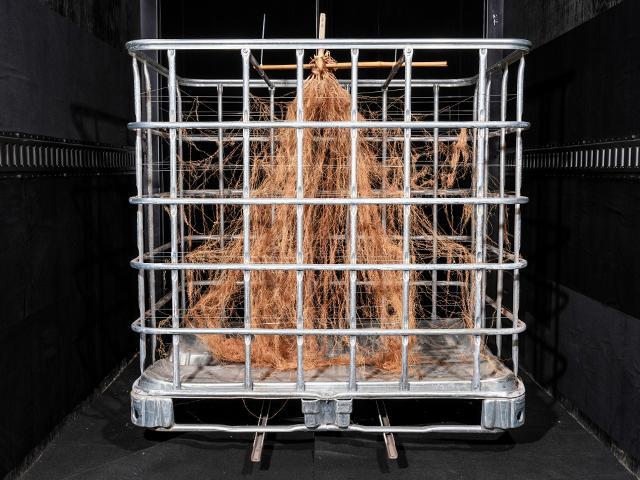
Corn root boxes allow Beck’s Hybrids researchers to evaluate root architecture and make management recommendations. (Provided by Beck’s Hybrids)
Modern maize is barely recognizable from its wild, grassy ancestors. But most of the changes over time have been directed at improving above-ground characteristics of the crop with an eye on increasing yield.
Now, studies suggest that unlocking more of corn’s yield potential lies below the soil surface. In fact, there’s some indication that over time, selection pressure for yield may have come at the expense of overall root mass. And, there appears to be genetic differences in how corn roots grow that hold implications for the future.
“Roots are the last unexplored area of crop physiology,” says Fred Below, a University of Illinois crop physiologist who has been looking into the intricacies of plant behavior for nearly 50 years. “Imaging technology is now allowing us to take a closer look at things that otherwise have been sight unseen, and some of our findings have been shocking.”
SIZING UP ROOTS
For example, data collected through the Illinois studies shows for every 1,000-plant increase in planting population, root mass declines by 2.5%.
“For years, we’ve increased seeding rates on average by 400 plants per acre,” Below says. “On average, root mass has decreased by 1% per year over the past 20 years.”
Farmers are familiar with the term “racehorse” or “offensive” hybrids. Below says those hybrids tend to have smaller roots systems because they direct energy to producing grain. “Defensive” hybrids, by contrast, have larger root systems and are bred to endure.
“The offensive hybrid will outyield the defensive hybrid if it is managed, and the season cooperates,” he explains. “We offset some of the root mass losses by going to a narrower row spacing.”
It was while looking at some of these differences and how they influence fertility usage and placement that the Illinois researchers began to notice three distinct root-growing habits. Some corn roots grew straight down. Others veered off on an angle. Other hybrids were shallower rooted but maintained a root mass that spread out more.
Crop physiologist Connor Sible, who works with Below, says total root mass of each of these corn roots can vary when exposed to changing environments, but how they grow remains true to growth type or architecture.
“It turns out, those trait characteristics are genetic and quite stable,” Sible says. “That could offer opportunities for farmers looking for hybrids that might better suit their circumstances and/or management.”
REVEALING LOOKS
The Illinois work intrigued Jim Schwartz, who leads Beck’s Hybrids agronomic research and Practical Farm Research (PFR). In 2024, the Atlanta, Indiana-based company launched a program called Root Reveal to evaluate how root sizes and shapes respond to population, fertility placement and environmental stress.
“We wanted to see if better understanding root systems would lead us to a unique way of making improved recommendations to growers,” Schwartz says. “We’re also looking ahead with belief that future technology will be more targeted to each plant.”
To carry out the experiments, they shrink-wrapped empty chemical totes, covered them with wooden boards and filled them with a clay-based growing medium. Containers were strung with fishing line to support and maintain the plant roots. Each cage contained an individual corn hybrid, and each hybrid was fed the same amount of water and nitrogen. Once the plants reached tassel, the stalk was cut off from nutrients and left to dry.
“What we saw upon unveiling was a dramatic visual demonstration of the various root systems — their volume and architecture,” says Schwartz, noting that 3D photography and other imagery helped show and record the differences.
The volume of roots represents the amount of root-to-soil contact of a specific hybrid. The more root-to-soil contact, the more opportunity for the roots to explore the soil and secure the nutrients they need.
Beck’s has also worked to characterize and classify every hybrid in the company’s product lineup based on root angle and structure. Their category definitions are: vertical roots (60- to 80-degree root angle), balanced roots (40- to 60-degree root angle) and horizontal roots (20- to 40-degree root angle).
Illinois researchers use slightly different terminology but are reaching similar conclusions. For example, smaller-rooted hybrids will likely have more response to applied fertility (deep-banded phosphorus and potassium). Horizontal-rooted hybrids will likely respond less to increased populations. Vertical-rooted hybrids appear to perform better in low-moisture or low-nitrogen environments as they scavenge for nutrients and water.
Schwartz says the cages were simply a method to grow roots in an undisturbed way. The results were eventually tested in field settings. Similar characteristics were observed to be repeatable through traditional root digs and across soil types.
So far, root architecture has not been used as a selection criteria for Beck’s, Schwartz adds. The distribution across the company’s current hybrid lineup was found to be 25% vertical, 25% horizontal and 50% balanced.
“We are starting to use gene editing to create some more vertical, architecture-type hybrids since they appear to be more stress tolerant,” he says, noting some population studies suggest vertical roots do better at high populations because roots don’t touch as quickly.
DIGGING DEEPER
Beck’s has widened research to include studies with the University of Nebraska-Lincoln and Purdue University to draw additional eyes underground.
Purdue University corn specialist Daniel Quinn has research to show that banding fertilizer next to vertically rooted hybrids increased yield by 14 bushels per acre compared to horizontally rooted hybrids, for example. Roots classified as more horizontal in growth benefited more from middle-of-the-row sidedressed applications.
“From our work, there’s nothing to indicate one type of root is better than another,” Quinn says. “For farmers, I see this as a way to dial in hybrid placement as the industry works to gain more understanding about how population changes and responses to nutrient rates and placement influence a hybrid’s performance.”
SIDEBAR:
BRACING DISCOVERIES
Corn’s funky, fingerlike protrusions known as brace roots still hold secrets after all these years.
“People that work on roots think they’re not roots because they are above ground, and those that research shoots think they are roots — so they’ve sort of been lost in this middle ground,” says Erin Sparks, a plant biologist with the University of Missouri and the Donald Danforth Plant Science Center.
Are they simply a burden on the plant — a carbon expense bringing no return? Or, do they really prop the plant up and help prevent lodging? After all, some brace roots hover and never reach ground.
Sparks has looked at different shapes and sizes of the secondary roots, and has used computer models to see how or if they provide structural support.
“Our current theory is that they act like guidelines on a tent — stabilizing the stalk and reinforcing the base of the plant,” she says, noting that in tests when brace roots are removed, stalks tend to tumble. “We’ve also shown that brace roots prevent plant uplift when subjected to wind.”
Sparks says it is also known that brace roots emerge from the stem after lodging, but questions remain as to whether these roots help with lodging recovery.
Some suggest brace roots only occur when a plant is stressed. She says they may “respond” to stress, but their presence does not necessarily mean the plants are stressed.
She also believes there may be environmental reasons brace roots begin to show up around the V8 growth stage. The corn plant’s vascular system is made up of two major vessels: the xylem and the phloem. The xylem is responsible for the transport of soil water and nutrients from the roots to the shoots. The phloem is responsible for the transport of sugar (food) from the leaves to the rest of the plant.
“In corn, there are multiple xylem elements. Mature maize roots have about six of these elements. But, brace roots can have to up to 48 xylem elements. So, the theoretical capacity to move water through a brace root is exponentially higher than through a primary root,” Sparks says.
“The lowest whorls of brace roots penetrate the soil and have been proposed to uptake water and nutrients. We have been able to measure that brace roots uptake nitrogen,” she adds.
In other studies, University of Wisconsin researcher Jean-Michel Ane is working with a Mexican corn line featuring above-ground roots that exude a viscous mucilage that contains bacteria that fix atmospheric nitrogen and give it to the plant. He says the trait has been successfully introduced into elite inbreds adapted to the Midwest. The hope is brace root discoveries will be used by plant breeders to develop hybrids that supply a portion of their own nitrogen.
For more information on the University of Wisconsin’s Nitrogen Fixation on the Aerial Roots of Maize (NFARM) project, visit https://nfarm.bact.wisc.edu/honoring-the-gift/
**
— Follow the latest from Pamela Smith, Senior Crops Editor, by following her on social platform X @PamSmithDTN or by visiting the Production Blogs at https://www.dtnpf.com
[PF_0926]
(c) Copyright 2026 DTN, LLC. All rights reserved.