


First US New World Screwworm Case in 60 Years Found in Texas Calf
USDA on Wednesday confirmed the first U.S. New World screwworm case in nearly 60 years in a beef calf in south Texas, causing cattle markets to close lower amid trader uncertainty.


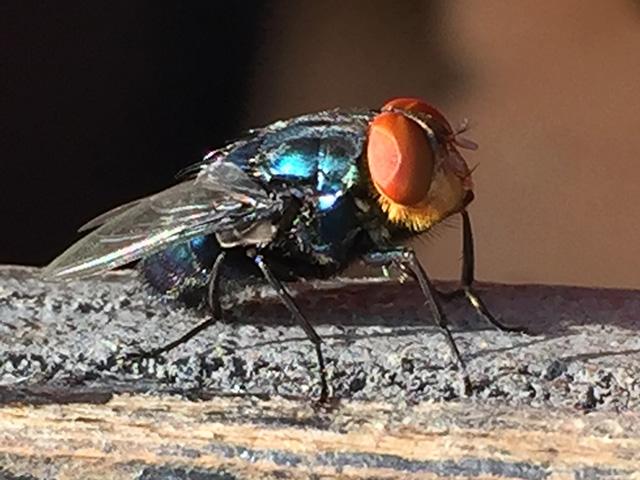
USDA confirmed on Wednesday the first U.S. case of New World screwworm in 60 years. (Photo courtesy of USDA APHIS)
OMAHA, Neb. (DTN) — USDA confirmed on Wednesday the first case of New World screwworm (NWS) was found in a 3-week-old calf near La Pryor, Texas, on a cow-calf operation. This is the first confirmed case in the U.S. livestock herd since 1966.
During a USDA press call, Rear Admiral Michael Schmoyer, Animal and Plant Health Inspection Service (APHIS) associate administrator and director of the NWS Directorate, said a private veterinarian collected the samples from the umbilical area of the beef calf. The veterinarian contacted the Texas Animal Health Commission, and along with USDA staff, the samples were transported to be tested for confirmation.
“The samples were sent on a charter plane to Ames, Iowa, to be tested at the USDA’s National Veterinary Services Laboratories, and as of Wednesday (June 3) evening, the test was confirmed as a positive New World screwworm case,” said U.S. Secretary of Agriculture Brooke Rollins. “This is the only case we are tracking, and we hope containment of this case will prevent further spread.”
IMMEDIATE ACTION TAKEN
USDA and Texas officials are taking immediate action to contain and eradicate NWS from the U.S., following the strategies and actions outlined in the NWS Response Playbook. This action included deploying a response team to the area; establishing a 20-kilometer infested zone around the detection and implementing quarantines, movement controls, and surveillance in this area; expediting targeted release of sterile NWS flies by immediately deploying ground release chambers in the area, in addition to the 4 million sterile flies per week; increasing trapping NWS surveillance and management strategies in wildlife; and conducting targeted outreach in the local area.
WORKING TOGETHER AGAINST THE PEST
Bud Dinges, executive director of the Texas Animal Health Commission, said they have been working together with USDA APHIS to confirm this case and conduct site visits in the area to communicate to other animal owners what to look for regarding NWS.
“Some of the key things that people need to know at this stage are to report suspicions immediately. If you suspect your animal may be infested with New World screwworm, notify the Texas Animal Health Commission and your local veterinarian immediately,” said Dinges. “Quick notification leads to quick detection. A quick response will stop the pest from spreading.”
He also stressed this is not a food safety issue. NWS does not infest any food, including meat, he said.
Dinges said it is pertinent for all animal owners, not just livestock owners, to be looking at their animals regularly. NWS is not an infectious disease, but rather a pest that enters a warm-blooded animal through a wound.
Prior to this confirmed Texas case, Rollins had said on Tuesday that the closest NWS case to the U.S. border was identified 25 miles away in a goat in the Mexican state of Coahuila. She noted the NWS fly doesn’t travel long distances in a short amount of time, but it is believed the pest is spreading on animals moved by humans or wild animals.
MARKET REACTION EXPECTED
DTN Livestock Market Analyst ShayLe Stewart said the markets reacted to the news even before NWS had been confirmed.
“With fears about NWS looming over the marketplace, both the live cattle and feeder cattle contracts closed lower Wednesday afternoon,” Stewart said. “The live cattle contracts closed $1 to $2 lower, while the feeder cattle contracts fell $4 to $5 lower.”
“It’s likely that the contracts will trade sharply lower at Thursday’s open, as that will be traders’ first opportunity to react to the news,” Stewart said.
Rollins said that, overall, 8,000 fly traps have been set at and near the U.S.-Mexico border, and 58,000 fly samples — along with 19,000 wild animal samples — have been collected, and all have been negative for NWS.
FIGHTING NWS
Schmoyer said that since February 2026, more than 129 million sterile NWS flies have been released in the sterile fly release zone, which includes the area where this case was found in Texas.
Sterile flies are the best way to combat the pest, as the fly will only mate once. The release of sterile flies to mate with wild flies prevents further reproduction. Currently, Panama has the only NWS sterile fly production facility, which produces around 100 million sterile flies per week. A facility in Metapa, Mexico, is expected to open soon, producing 60 million to 100 million sterile flies per week. Construction also continues at Moore Air Base in Edinburg, Texas, of a facility to produce 100 million sterile flies per week. Completion of the facility is expected in November 2027, and then it will gradually ramp up to producing 300 million sterile flies per week.
Three animal drug products have been authorized for the prevention and/or treatment of NWS in cattle. Merck Animal Health has conditional approval from the Food and Drug Administration for Exzolt Cattle-CA1. This drug is also approved for the treatment and control of cattle fever tick.
Dectomax-CA1, produced by Zoetis Inc., has conditional approval for the treatment and prevention of NWS. Boehringer Ingelheim received emergency use authorization from the FDA for the use of Ivomec (Ivermectin) 1% injection for the prevention of infestations caused by NWS in cattle.
Rollins alluded to other work being done to produce more sterile flies to combat the pest and expects to make more of an announcement on this information soon.
DTN Environmental Editor Todd Neely contributed to this article.
**
For more DTN coverage on NWS, see “Latest NWS Case Is 25 Miles From US” here: https://www.dtnpf.com/agriculture/web/ag/columns/washington-insider/article/2026/06/02/usda-ramps-defense-nws-pest-closes.
And for more context on what the presence of NWS in the U.S. means for cattle producers, markets and consumers, see “Call the Market: At This Point, It’s Not If But When New World Screwworm Appears in US” by DTN Livestock Analyst ShayLe Stewart here: https://www.dtnpf.com/agriculture/web/ag/news/article/2026/06/03/point-new-world-screwworm-appears-us.
Jennifer Carrico can be reached at Jennifer.carrico@dtn.com
Follow her on social platform X @JennCattleGal
Todd Neeley can be reached at todd.neeley@dtn.com
Follow him on social platform X @DTNeeley
(c) Copyright 2026 DTN, LLC. All rights reserved.