


Be Cautious Grazing Johnsongrass
Dr. Ken McMillan responds to a readers' questions about farm veterinary issues.



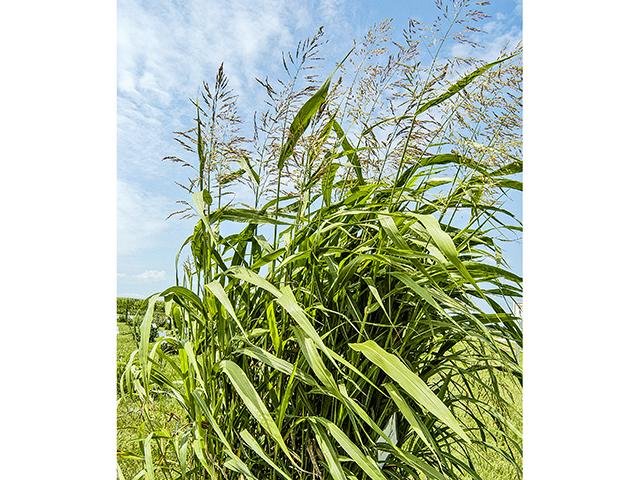
Stress events, including drought, herbicide application or freezing, can increase cyanide toxicity in johnsongrass. (Gregg Hillyer)
READER: We have a problem with johnsongrass in our hay field. We were fortunate to get enough hay early this year, and the johnsongrass got pretty tall after the last cutting. Before we could graze it, we had an early frost. I have heard this can be dangerous. What do we need to do?
DR. McMILLAN: Johnsongrass is a member of the sorghum family (Sorghum halepense) that includes grain sorghum, Sudangrass and Sudex (a hybrid of sorghum and Sudangrass), among others. It’s closely related to corn. I mention this because the potential issues with johnsongrass are also present with these other plants.
All of these plants can accumulate nitrates, especially with heavy nitrogen fertilization. In this case, I would be most concerned about cyanide or prussic acid toxicity. Any stress, including drought, herbicide application or frost or freezing, can increase the cyanide in these plants. Immature and rapidly growing plants have the highest potential to be toxic, which is what you probably had.
Cyanide in these forages exists as a harmless compound known as cyanogenic glycosides but is converted by rumen microbes and enzymes to hydrogen cyanide. This is rapidly absorbed into the bloodstream and blocks cellular respiration in the mitochondria, the power plant of the cell. The blood has a bright-red color because it has high levels of oxygen, but the cells can’t use it. The brain and heart are the first to be affected.
Early signs include hind leg weakness, salivation, rapid breathing and a bright-red color to mucous membranes. Death is the first sign seen because of rapid progression.
Your veterinarian can treat affected animals if caught early, but that is often not possible. The best plan is to avoid the problem. The good news is unlike nitrates, cyanide rapidly breaks down in forage or hay. Avoiding grazing the affected pasture for two weeks should allow this breakdown to occur.
To avert this issue in the future, there are good herbicides that selectively kill johnsongrass. Remember, too, that johnsongrass is extremely palatable and a high-quality forage. Cows love it and will select it over most grasses. So, grazing pressure can also eliminate it for a lot less than herbicides, if this is an option.
While talking about cyanide, the most common issues with cyanide poisoning I have seen involved ingesting wild cherry leaves after a storm or when they have been cut down in the pasture with cattle.
READER: In a previous column, you mentioned nitrate toxicity in johnsongrass but then focused on cyanide. I have always been more concerned about nitrates than cyanide. Am I wrong?
DR. McMILLAN: No, you are spot on. Nitrates are very dangerous, and they do not break down in forages or hay like cyanide does. Unlike cyanide, where certain plants are most commonly involved, many common forages can accumulate dangerous or deadly levels of nitrates. Besides hay and forage, water high in nitrates can lead to toxicity in cattle, too.
Any stressor, including drought, herbicide application, hail, high temperatures or frost and freezing, can increase the nitrates in these plants by interfering with the plant’s ability to convert nitrates into plant protein.
Clinical signs of nitrate toxicity include weakness, tremors, staggering, rapid breathing and a characteristic chocolate-brown blood color. Dead animals are often the first sign.
When cattle consume forage or hay high in nitrates, they are converted to nitrites in the rumen and then rapidly absorbed into the bloodstream. The nitrites convert hemoglobin into methemoglobin, which is very inefficient in carrying oxygen to the cells. This causes the blood to be a chocolate color.
Your veterinarian can treat cattle with nitrate toxicity if caught early with some success, but avoidance is the best practice. Soils low in potassium and phosphorus increase the possibility of toxic levels of nitrates, so this is just another reason why soil testing is so important. Proper application, fertilizer blend based on the soil test and good technique can avoid many problems and save money.
Since nitrates persist in forage and in hay, testing for nitrates in any questionable forage is important. By knowing the nitrate level, your veterinarian or a nutritionist can create a plan on how to feed the hay. Good management can minimize or eliminate any problems.
**
— Please contact your veterinarian with questions pertaining to the health of your herd. Every operation is unique, and the information in this column does not pertain to all situations. This is not intended as medical advice but is purely for informational purposes.
— These are only my thoughts and general guidelines. Please get with your veterinarian and together develop the best program for your herd.
— Email Dr. Ken McMillan at vet@dtn.com
[PF_061026]
(c) Copyright 2026 DTN, LLC. All rights reserved.